Endocannabinoid System (ECS):
A Key Role in Type 1 Diabetes
History of ECS Discovery
The endocannabinoid system (ECS) was discovered through research into the interaction between THC and cannabinoid receptors. In the 1960s, Dr. Raphael Mechoulam isolated THC, leading to breakthroughs in identifying CB1 and CB2 receptors and endocannabinoids such as anandamide (AEA) and 2-arachidonoylglycerol (2-AG). This discovery revealed the ECS’s fundamental role in regulating key physiological processes.
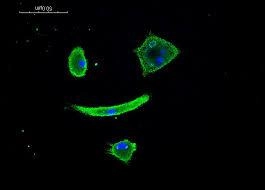
Cannabinoid CB1 receptors
What is the endocannabinoid system?
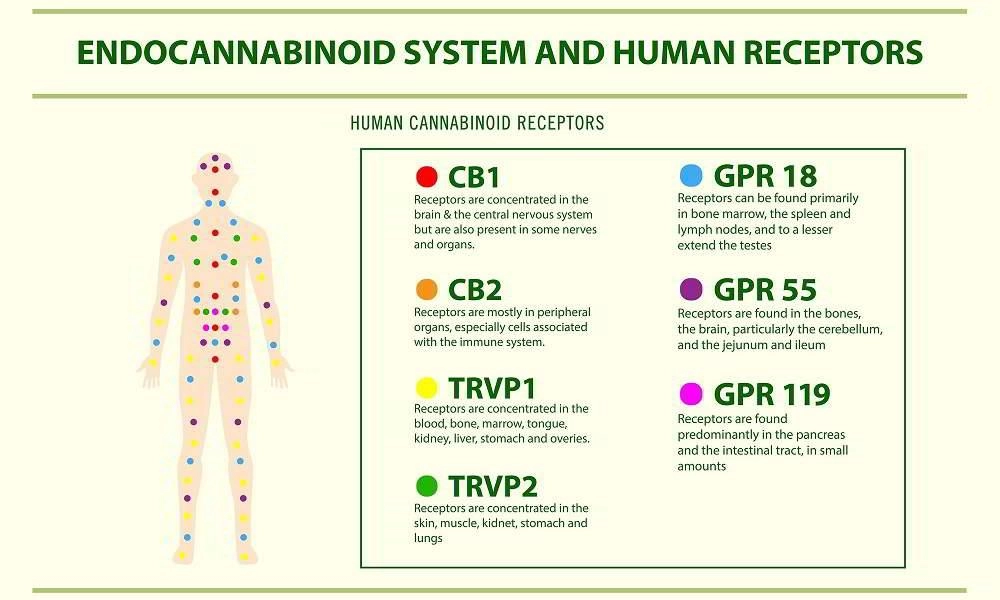
The ECS is a complex biological system present in mammals, responsible for maintaining metabolic, immune, and cellular balance. It consists of three main components:
Cannabinoid receptors:
- CB1 – found primarily in the brain, nervous system, and metabolic tissues; overactivity can lead to inflammation and β-cell death.
- CB2 – predominantly found in the immune system; protect β-cells from destruction, but their expression decreases in T1D.
- GPR18 – present in β-cells and immune cells; overactivation worsens β-cell function and enhances autoimmunity.
- GPR55 – regulate calcium signaling in β-cells; desensitization impairs insulin secretion.
- GPR119 – found in β-cells and intestines; support glucose-stimulated insulin secretion, which is reduced in T1D.
- TRPV1 – involved in calcium homeostasis; desensitization disrupts β-cell function and insulin release.
- TRPV2 – help regulate calcium and protect β-cells; dysfunction worsens insulin secretion issues.
Endocannabinoids: naturally occurring lipid compounds such as AEA and 2-AG that act as chemical signals by binding to receptors.
Metabolic enzymes: responsible for the synthesis and degradation of endocannabinoids, ensuring precise ECS regulation (e.g., FAAH and MAGL).
Role of ECS in Type 1 Diabetes (T1D)
In T1D, ECS dysfunction may significantly contribute to disease progression. Key aspects include:
- Excessive activation of CB1 and GPR18:
- Leads to chronic inflammation and apoptosis (death) of pancreatic β-cells, which are essential for insulin production.
- Reduced activity of protective receptors:
- CB2 – reduced anti-inflammatory response.
- GPR55 – impaired calcium signaling in β-cells, necessary for insulin secretion.
- GPR119 – decreased ability to regulate glycemia via insulin stimulation.
- TRPV1 i TRPV2 – dysfunction in calcium regulation, weakening protection of β-cells from metabolic stress.
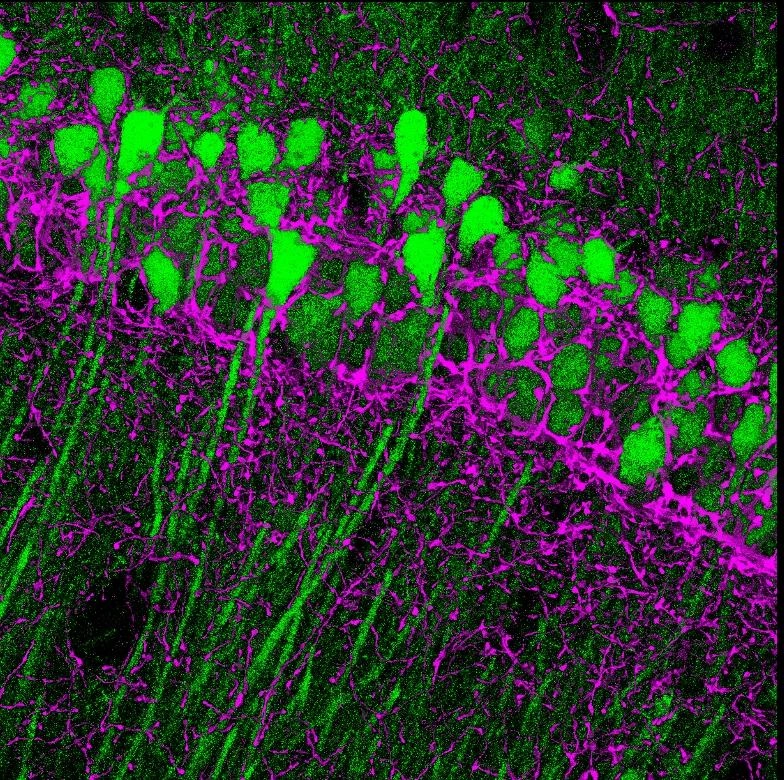 Endocannabinoid CB1 receptors in the hippocampus.
Endocannabinoids: Key ECS Molecules
- Anandamide (AEA):
- Regulates mood, appetite, and insulin secretion. Its low level, due to chronic inflammation
in T1D, weakens the body's ability to protect β-cells. - 2-Arachidonoylglycerol (2-AG):
- A potent agonist of CB1 and CB2 receptors. In T1D, its excess leads to chronic
inflammation that destroys β-cells.
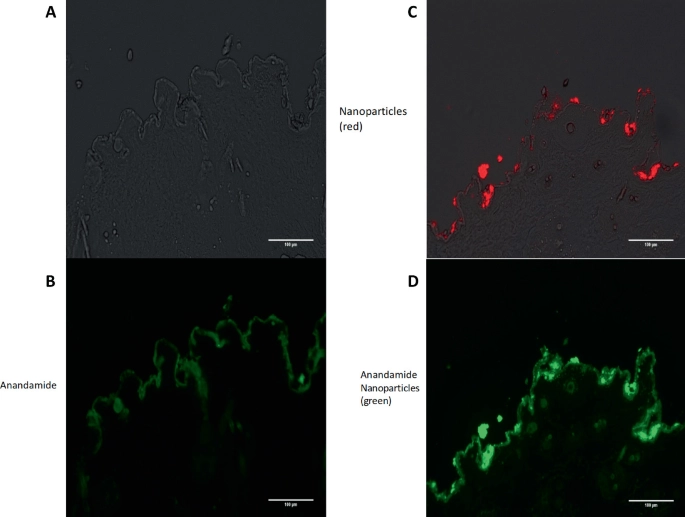
Anandamide nanoparticle
Significance of ECS in T1D Therapy
Understanding ECS dysfunction opens the door to new therapeutic strategies:
- Restoring ECS balance: Modulating CB1, CB2, GPR55, GPR119, and TRPV1/2 receptors may help reduce inflammation, improve insulin secretion, and protect β-cells.
- Impact on metabolic homeostasis: Regulating ECS can support both the immune and metabolic systems, which is essential in T1D therapy.
Source: https://www.mdpi.com/1424-8247/16/2/148
For more detailed information on ECS in T1D, see the Research section.